Ask any European surf coach where they'd send a complete beginner for a first surf trip, and a large proportion will say Morocco. This might seem surprising — Morocco isn't in Europe, it's across the Strait of Gibraltar, technically on the African continent. But for European travellers, it's closer than the Canary Islands by flight, cheaper than Portugal, warmer than France, and more consistent than almost anywhere.
For beginner surfers in particular, Morocco offers a combination of conditions, infrastructure, and value that no European destination can match. Here's why.
1. The Waves Are Genuinely Beginner-Friendly
This sounds obvious, but it matters enormously. Morocco's surf coast, particularly the stretch around Taghazout, Tamraght, and Imesouane, is one of the rare places in the world where excellent beginner waves exist within easy reach of world-class breaks. You don't have to choose between a spot that's good for learning and a destination that's worth visiting — Morocco delivers both.
What Makes These Waves Perfect for Beginners
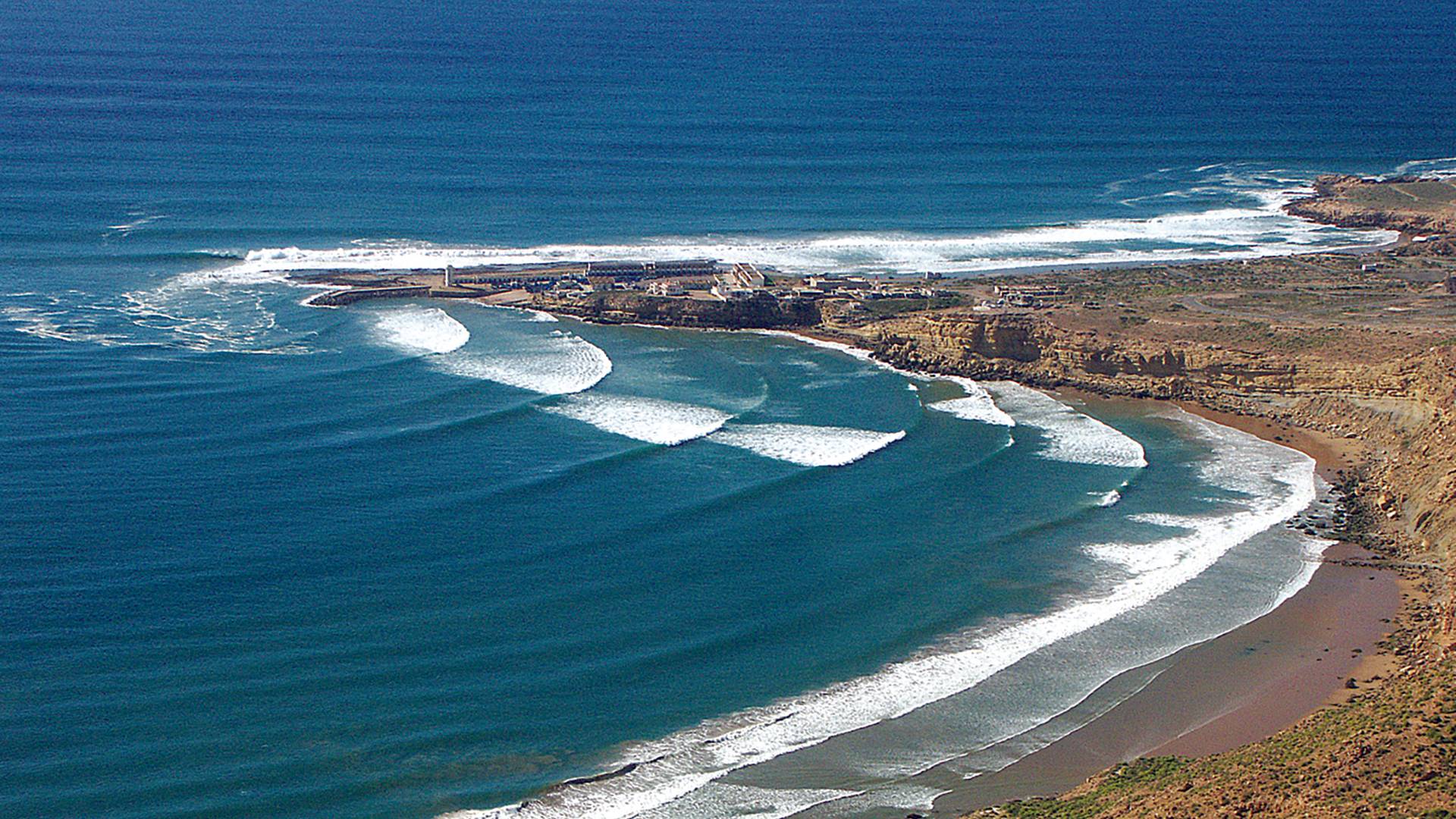
- Long, slow rides. Imesouane's bay wave travels for up to 800 metres without closing out — giving you time to find your feet, adjust your balance, and actually enjoy the ride rather than being immediately wiped out.
- Sandy bottoms. Most beginner spots along this coastline have sandy or gently shelving bottoms, making falls significantly less painful than reef or rock breaks.
- Forgiving size. From May to October, wave height at beginner spots typically ranges from 0.5 to 1.5 metres. Enough to surf, not enough to intimidate.
- Warm water. Summer sea temperatures reach 22–24°C. You can surf in boardshorts or a light shorty, which makes learning much more comfortable than battling a 5mm wetsuit.
2. More Sun, More Sessions
Learning to surf takes repetition. The more time you can spend in the water, the faster you progress. Morocco's coast receives more than 300 days of sunshine per year, and the Atlantic provides consistent, rideable swells on most days year-round.
Compare this to the typical European alternative: a week in Cornwall, Hossegor, or the Basque Country in summer might give you three or four surfable days out of seven. A week in Morocco almost always gives you seven. That's the difference between twelve water sessions and four — and at the beginner stage, that difference is transformative.
3. The Infrastructure for Surf Learning Is Exceptional
Taghazout, Tamraght, and the surrounding area have developed a mature, professional surf school ecosystem over the past fifteen years. Instructors are ISA (International Surfing Association) certified, English-speaking, and experienced with complete beginners of all ages and fitness levels. Equipment is modern, well-maintained, and correctly sized — soft-top boards for learning, shorties or light wetsuits for cooler months.
Most surf camps on this coast run structured progression programmes: pool or land theory on day one, white water on day two, unbroken and broken green waves from day three onward. By the end of a week, the majority of beginners are riding green waves unassisted. That progression rate is consistently better than what European surf schools report.
4. Cost: A Fraction of European Equivalents
A week-long all-inclusive surf camp in Morocco — accommodation, meals, daily surf lessons, equipment, and transfers — typically costs between €600 and €900 per person depending on the camp and season. The equivalent in the Algarve, Hossegor, or Fuerteventura runs €1,200–€1,800 or more for the same package. Flights from most European cities to Agadir run €80–€180 return.
This cost advantage means many beginner surfers can afford to come back. And coming back — doing a second week six months after the first — is one of the most effective ways to consolidate progress.
5. The Cultural Experience Is Part of the Learning
Surfing in Morocco isn't just about surfing. The culture surrounding it — the food, the landscape, the people, the ancient medinas, the Berber villages in the hills — adds a dimension that purely-surf destinations don't offer. Beginner surfers who might feel frustrated after a difficult session in the water have something to come back to: a sunset over the Atlantic from a rooftop cafe, a tagine slow-cooked over charcoal, a walk through an argan forest.
That broader experience keeps people engaged with the trip, which keeps them returning to the water, which accelerates their progression. Morocco is one of the few surf destinations where non-surfers accompanying a beginner will have a genuinely excellent time too.
6. The Moroccan Surf Community Is Welcoming
One of the less-discussed barriers to learning surf is social: crowded lineups, experienced surfers who communicate impatience, a culture that can feel unwelcoming to newcomers. This is a genuine problem at popular spots in Portugal, France, and Spain, particularly in summer.
Morocco's surf community — both local Moroccan surfers and the international community of coaches and travellers based around Taghazout — has a well-established reputation for being inclusive and encouraging toward beginners. Local surfers grew up learning in waves similar to what beginners are riding today, and there's a generosity in how they approach teaching and sharing the ocean.
7. Year-Round Accessibility from Europe
Agadir is served by direct flights from most major European cities: London, Paris, Amsterdam, Brussels, Madrid, and dozens of others. Flight time is typically 3–4 hours. The time zone difference is one hour or none, depending on the season. There's no jet lag, no long-haul logistics, and no complicated visa requirements for EU, UK, or Schengen passport holders (visa-free for stays up to 90 days).
This combination — short flights, no visa, year-round sun, consistent swell — makes Morocco as accessible as any European surf destination for the actual travel, with significantly better conditions when you arrive.
How to Plan Your First Morocco Surf Trip
The easiest way to plan a first surf trip to Morocco is through Moramara, the dedicated Moroccan surf and travel platform built specifically for this coastline.
Moramara offers:
- All-inclusive surf packages — accommodation, lessons, equipment, meals, and transfers bundled at transparent prices. Ideal for first-timers who want everything taken care of.
- Surf stays — a curated selection of surf camps and guesthouses across Taghazout, Tamraght, Imesouane, and beyond, filtered by surf level, budget, and style.
- Activities marketplace — book beyond-surf experiences (cooking classes, desert excursions, yoga, cultural tours) directly alongside your surf package.
- Custom Package Builder — design your own trip from scratch: choose your accommodation, layer in activities, and build an itinerary that's entirely yours.
For a first trip, the all-inclusive package option is the path of least resistance. You arrive, your board is ready, your instructor is waiting, and the only decision you need to make is which wave to paddle for.
Common Questions from Beginner Surfers
Do I need to be fit to learn to surf in Morocco?
Basic swimming ability and reasonable general fitness are helpful, but surf schools here work with beginners of all shapes, sizes, and fitness levels. Most sessions are 2 hours in the water, which is manageable for the majority of people.
What time of year is best for beginner surfers?
May through September offers the most consistently small, clean waves and the warmest water. October through April is the core swell season — waves can get bigger, but beginner spots are sheltered and usually still manageable. Year-round, instructors tailor lessons to actual conditions on the day.
Can I bring my family if not everyone surfs?
Absolutely. Moramara's activities marketplace includes options for non-surfers: camel treks, cooking classes, hammam visits, cultural tours, and more. Morocco is one of the few surf destinations where a mixed group — some surfers, some not — will all have a great time.
The Verdict
For European beginners, Morocco is not a compromise or a budget alternative — it's the best choice on its merits. Better waves, better weather, better value, better culture, and a surf learning environment that has been refined over decades. The only question is which week to book.
Start planning at Moramara — the platform built for exactly this journey.