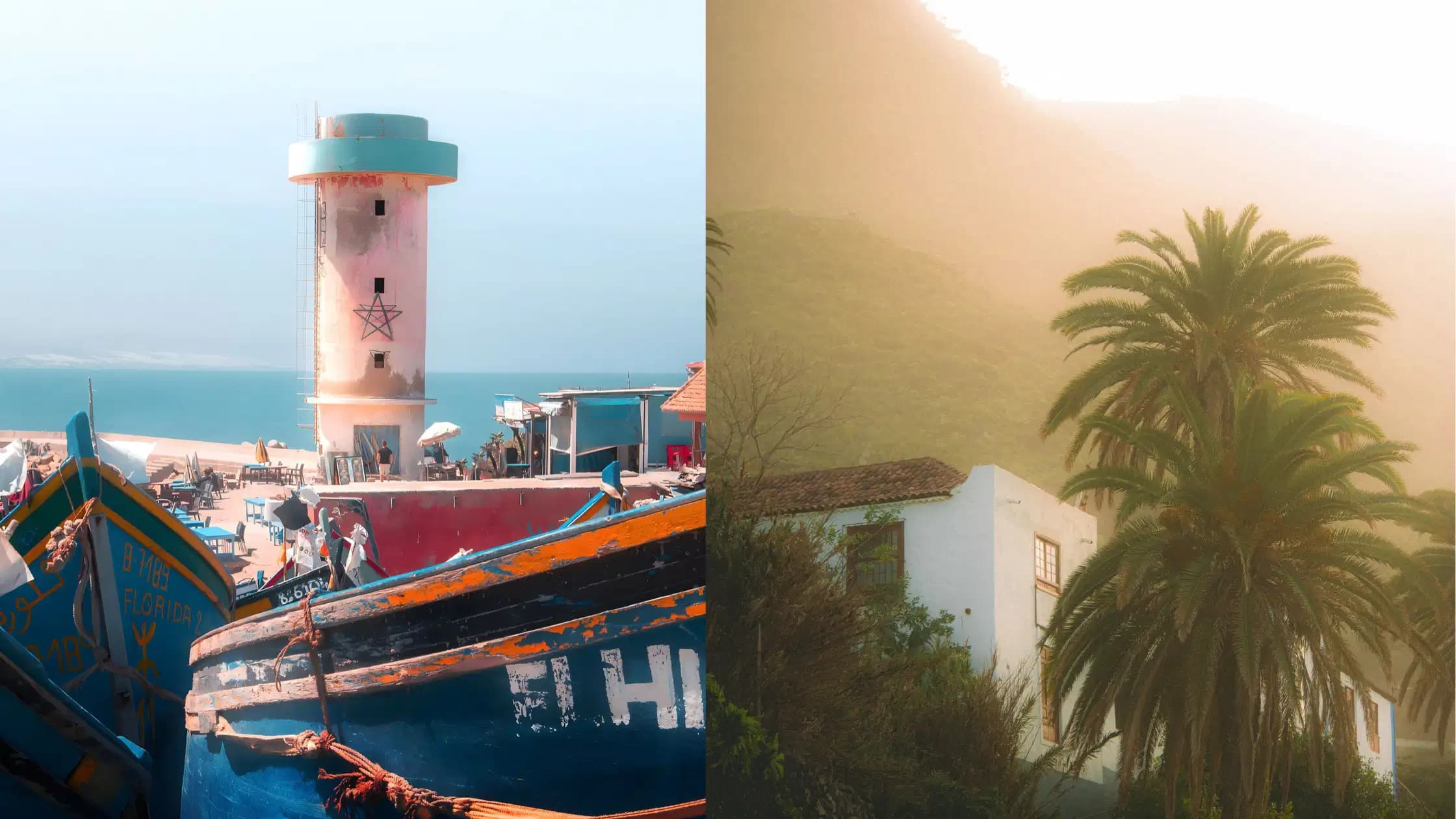
Short answer: Both destinations offer warm-enough water and reliable year-round waves, but they suit slightly different trips. The Canary Islands have more volcanic reef and rock breaks that reward experience and often stronger wind, while Morocco offers a wider spread of beginner-friendly sandy breaks, lower prices, and a more established surf camp scene built specifically around lessons and progression.
Explore Surf Destinations in Morocco: Taghazout - Tamraght - Imsouane - Aourir & Banana Point
Morocco vs Canary Islands at a Glance
| Category | Morocco | Canary Islands |
|---|---|---|
| Wave variety & quality | Sandy beach breaks and long right-hand points within a small area | Volcanic reef and rock breaks with powerful, often hollow waves |
| Level of surfing required | Wide range, with several genuinely beginner-friendly sandy spots | Skews toward intermediate and advanced; reef breaks demand more experience |
| Best months to surf | Year-round; biggest swells October to April | Year-round; biggest swells October to March |
| Water temperature | 17 to 24°C across the year | 18 to 23°C across the year, slightly milder in winter |
| Wind conditions | Generally lighter, with reliable offshore periods in the morning | Often windier, especially Fuerteventura and Lanzarote in summer |
| Crowds | Busy at top points in peak season, quieter alternatives close by | Can be heavily crowded at well-known reef breaks |
| Accommodation & trip costs | Lower overall; week-long camps commonly €600 to €900 all-inclusive | Higher overall, as an EU destination with euro-zone pricing |
| Surf camps | Mature camp scene built around structured lessons and progression | Well-established camp scene, often geared toward experienced surfers |
| Surf-trip logistics | Direct flights to Agadir from most major European cities, no visa for EU/UK/Schengen passports | Direct flights across Europe, no visa needed as an EU territory |
| Climate | Over 300 days of sunshine a year, mild in winter | Mild, spring-like climate year-round |
| Atmosphere / destination experience | Berber and Moroccan coastal culture, markets, food and hospitality alongside the surf | European island atmosphere, volcanic landscapes, well-developed tourist infrastructure |
| Beginner, intermediate, advanced options | Strong at every level, with beginner and advanced waves close together | Strongest for intermediate and advanced surfers; fewer sheltered beginner spots |
Wave Variety and Level Required
The Canary Islands are volcanic, so their breaks tend to run over reef and rock rather than sand, producing powerful, often hollow waves that reward experience and punish mistakes. Morocco's coast around Taghazout mixes sandy beach breaks with rock and reef points, giving a gentler entry point for less experienced surfers without losing access to genuinely world-class waves like Anchor Point.
Best Months and Water Temperature
Both destinations work year-round, with the biggest swells from October through the winter months. Water temperature is broadly similar, though Morocco's water can be slightly cooler in the depths of winter and slightly warmer at the peak of summer than the Canaries, which stay closer to a stable, spring-like temperature all year.
Wind and Crowds
Wind is one of the bigger practical differences: the Canary Islands, and Fuerteventura and Lanzarote in particular, are known for strong trade winds, especially in summer, which can affect wave quality at exposed spots. Morocco's coast generally sees lighter wind with more reliable offshore periods in the morning. Both destinations get crowded at their best-known breaks, but Morocco's spread of nearby towns, Taghazout, Tamraght, Imsouane and Aourir, makes it easier to move somewhere quieter without a long drive.
Accommodation, Trip Costs and Surf Camps
As an EU territory, the Canary Islands generally run more expensive than Morocco for accommodation, food and camp packages. A week-long all-inclusive surf camp in Morocco typically costs €600 to €900 per person, noticeably less than comparable packages in the Canaries. Both destinations have well-established surf camp industries, but Morocco's camps put more emphasis on structured beginner and progression programmes, while Canary Islands camps often lean toward guiding experienced surfers to the right reef break on the day.
Logistics and Climate
Both are easy to reach from Europe with no visa required for EU, UK or Schengen passport holders, and both offer mild, sunny climates for most of the year. Morocco's coast sees over 300 days of sunshine annually and stays comfortable even in the winter surf season.
Atmosphere and Destination Experience
The Canary Islands offer a European island experience with volcanic landscapes and well-developed tourist infrastructure. Morocco brings a different kind of destination entirely: Berber and Moroccan coastal culture, markets, mint tea and tagines alongside the surf, which appeals to travellers who want their surf trip to double as cultural travel.
Why Morocco Is an Attractive Alternative
For surfers who want a gentler learning curve, lower prices, and a wider spread of beginner-friendly waves without giving up access to serious point breaks, Morocco is a compelling alternative to the Canary Islands, especially for first-time surf travellers, mixed-ability groups, and anyone who wants their trip to include more than just the reef out front.
Explore Surf Destinations in Morocco: Taghazout - Tamraght - Imsouane - Aourir & Banana Point
Frequently Asked Questions
Is Morocco cheaper than the Canary Islands for surfing?
Generally yes. As an EU territory, the Canary Islands tend to run more expensive for accommodation, food and surf camp packages than Morocco.
Are the Canary Islands better for experienced surfers?
The Canaries' volcanic reef and rock breaks do reward experience and can be more demanding than Morocco's mix of sandy beach breaks and points, but both destinations have waves that suit advanced surfers.
Is Morocco good for beginners compared to the Canary Islands?
Yes. Morocco has more sandy-bottomed, beginner-friendly breaks such as Taghazout Bay, Imsouane's Bay and Aourir's Banana Point, generally more forgiving than the Canaries' reef-dominated line-ups.
Do I need a visa to surf in Morocco or the Canary Islands?
EU, UK and Schengen passport holders don't need a visa for short stays in either destination. Always check current entry requirements for your specific passport before travelling.
Sources and Limitations
Comparisons are based on publicly known geographic, seasonal and climate patterns for each region and Moramara's experience running surf trips in Morocco. Prices and conditions vary by season and operator, so check current rates and forecasts before booking.
About the Author
Written and reviewed by the Moramara Surf Team, which works with surf camps across Morocco's Atlantic coast.