Quick answer
Imsouane is a small surf village on Morocco's Atlantic coast known for The Bay, a long and mellow right-hand point break that suits beginners, longboarders and progressing surfers. On the other side of the peninsula, Cathedral Point offers faster and more powerful surf for intermediate and advanced surfers. The most consistent swell generally arrives from autumn through early spring.
Compare Surf Camps in Imsouane → • Explore Surfing in Morocco
Imsouane Surfing at a Glance
- Main waves: The Bay and Cathedral Point
- The Bay: long, mellow right-hand point break
- Cathedral: more exposed and powerful
- Main surf season: autumn through early spring
- Best for: beginners, longboarders, progressing surfers and surf-focused trips
Best Surf Spots in Imsouane
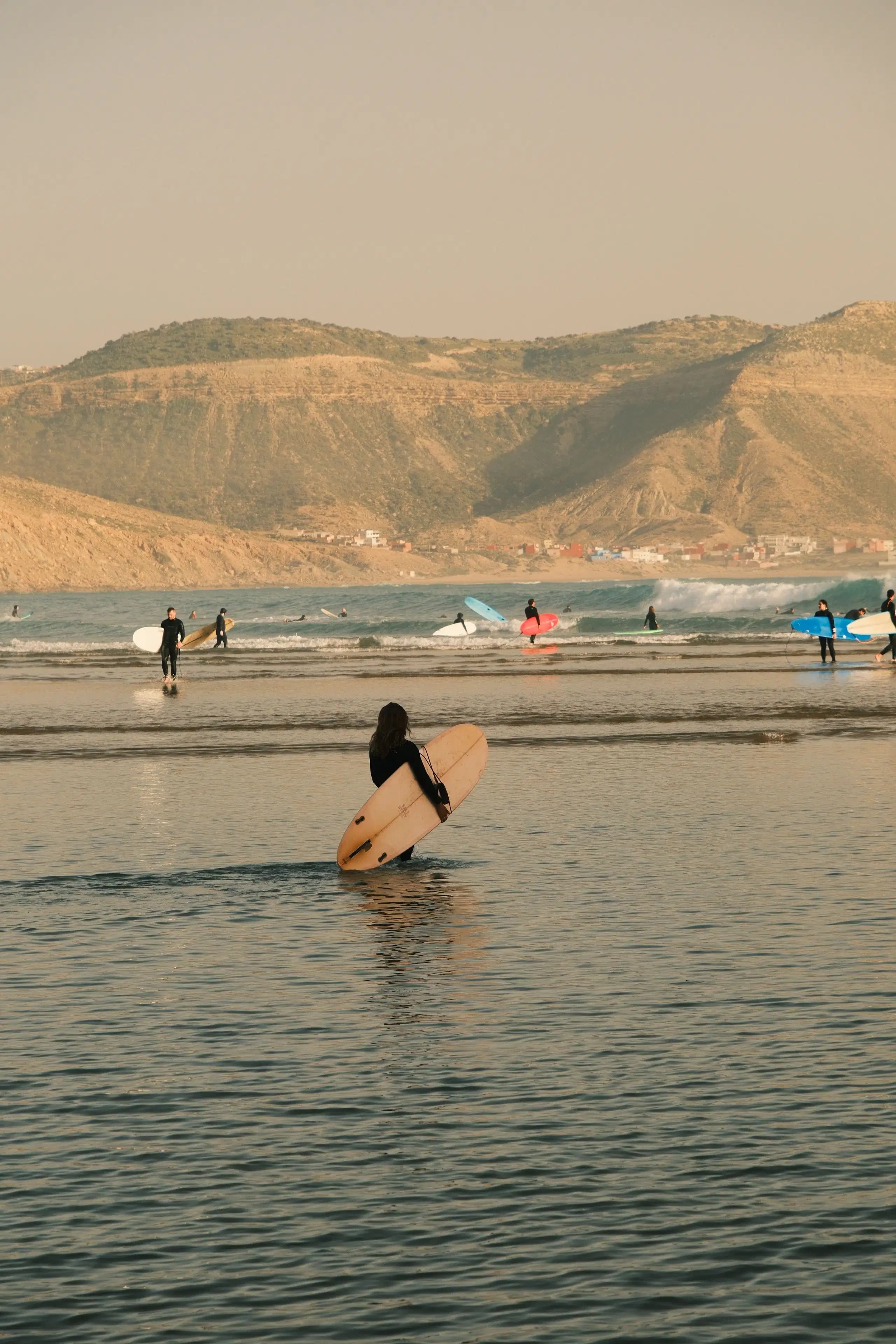
Imsouane is unusual because two very different surf zones sit around the same peninsula. The Bay is known for long, forgiving rides, while the Cathedral side is more exposed and offers stronger surf.
The Bay
The Bay is Imsouane's signature wave and is often described as one of the longest rideable waves in Morocco.
It is a long, mellow right-hand point break that can offer extended rides when swell, tide and wind line up. Surfline describes it as a classic beginner and surf-school wave, while also noting that it is popular with longboarders and experienced surfers riding fish or alternative boards.
The bottom includes both sand and rocks, and although the wave can feel forgiving on smaller days, crowds and changing conditions still require basic surf awareness and etiquette.
Cathedral Point
Cathedral Point sits on the more exposed side of the Imsouane peninsula and offers a very different experience from the Bay.
The right-hand point is steeper, faster and more powerful, with stronger sections and the possibility of barrels on suitable swells.
Surfline rates Cathedral as an intermediate-to-advanced break. Nearby beach peaks can also offer options for intermediate surfers depending on tide and swell.
Nearby: Tamri
Tamri lies farther south on the coastal road toward Taghazout and is not part of Imsouane itself, but it can be a useful alternative when travelling between the two destinations.
It is a more exposed beach-break area and can pick up swell when some sheltered spots are smaller.
The Bay vs Cathedral: Which Should You Surf?
| Feature | The Bay | Cathedral |
|---|---|---|
| Typical level | Beginner–Intermediate | Intermediate–Advanced |
| Wave character | Long, mellow right | Faster, steeper and more powerful |
| Best boards | Longboard, funboard, fish | Shortboard and performance-oriented boards |
| Best suited to | Long rides and progression | More power and performance surfing |
Best Time to Surf in Imsouane
Imsouane can receive surf throughout the year, but the most reliable period for stronger North Atlantic swell is generally autumn through early spring.
Surfline lists autumn and winter as the best season for The Bay, while Cathedral's strongest window extends roughly from September through April.
During summer, swell is often smaller. That can create more approachable conditions for beginners at the Bay, although no month guarantees a particular wave size.
Water Temperature and Wetsuits
Atlantic water around Imsouane remains relatively mild year-round but is generally cool enough that most surfers prefer neoprene.
A 3/2 mm wetsuit is a common all-round option for much of the year. In warmer periods, some surfers may be comfortable in lighter neoprene, while people who feel the cold may want something warmer during winter.
What Is Imsouane Like?
Imsouane has a slower and more surf-focused atmosphere than Taghazout. The village is smaller, and daily life tends to revolve heavily around surf conditions, fishing, cafés and the ocean.
The Bay's reputation also means it is not necessarily empty. Surfline describes the crowd factor as heavy on good days because the wave attracts surf schools, longboarders and travelling surfers.
Travellers choosing Imsouane should therefore expect a quieter village atmosphere than Taghazout, but potentially a busy lineup when the Bay is working well.
Who Is Imsouane Best For?
Beginners
The Bay is one of Morocco's better-known beginner and surf-school waves because of its generally mellow shape and long rides in suitable conditions.
Beginners should still surf with an instructor or choose conditions appropriate to their level, especially when the lineup is crowded.
Progressing and Intermediate Surfers
Imsouane is particularly good for surfers working on positioning, trimming, turns and linking longer sections because The Bay can offer much longer rides than a typical beach break.
Experienced Surfers
Experienced surfers can enjoy larger days at The Bay, but Cathedral is generally the better choice for anyone looking for more speed, power and performance surfing.
Imsouane vs Taghazout: Which Should You Choose?
Both destinations are major parts of Morocco's surf scene, but they suit different styles of trip.
| Feature | Imsouane | Taghazout |
|---|---|---|
| Atmosphere | Slow and surf-focused | Livelier and more social |
| Signature wave | The Bay | Anchor Point |
| Beginner appeal | Very strong in suitable Bay conditions | Softer options available, but famous points are more advanced |
| Best suited to | Surf-first trips and long sessions | Surf + cafés + social life |
How to Get to Imsouane
Imsouane sits between Agadir and Essaouira on Morocco's Atlantic coast and is farther from Agadir than Taghazout, Tamraght or Aourir.
From Agadir Airport
Agadir Al Massira Airport is approximately 115 km from Imsouane. Driving takes roughly 1 hour 50 minutes to 2 hours in normal conditions.
From Essaouira Airport
Essaouira Mogador Airport is around 84 km away, with a driving time of roughly 1 hour 15 to 1 hour 20 minutes.
From Marrakech
Marrakech is roughly 250 km away by road. A direct drive typically takes around 4 hours, while public transport takes longer and may require a connection.
Find your surf trip
Compare Surf Camps in Imsouane
Compare surf packages, prices and inclusions from camps in one of Morocco's most distinctive surf destinations.
Explore Imsouane Surf Camps →Frequently Asked Questions About Surfing in Imsouane
Why is Imsouane famous for surfing?
Imsouane is best known for The Bay, a long and mellow right-hand point break that is often described as one of the longest surfable waves in Morocco.
Is Imsouane good for beginners?
Yes. The Bay is widely used by surf schools and can be very suitable for beginners in manageable conditions. Beginners should still surf with appropriate supervision and be aware of crowds.
What is Cathedral Point?
Cathedral Point is the more exposed surf zone on the other side of Imsouane's peninsula. It offers faster and more powerful right-hand waves and is generally better suited to intermediate and advanced surfers.
Can experienced surfers enjoy Imsouane?
Yes. Experienced surfers can enjoy larger days at The Bay and more performance-oriented conditions at Cathedral.
When is the best time to surf in Imsouane?
Autumn through early spring generally brings the most consistent North Atlantic swell. Summer often brings smaller conditions that can suit beginners and longboarders.
How far is Imsouane from Agadir?
From Agadir Al Massira Airport, Imsouane is roughly 115 km away and takes close to two hours by car in normal conditions.
Sources and Limitations
Surf conditions vary with swell size, swell direction, tide, wind and local sand or rock conditions. The skill-level descriptions in this guide are general guidance and should not be treated as a guarantee that a particular break will be suitable on any given day.
Wave information was cross-checked against current surf-forecasting resources including Surfline, while travel-time estimates were checked against current road-distance data. Moramara also works with surf camps and instructors based in Imsouane.